

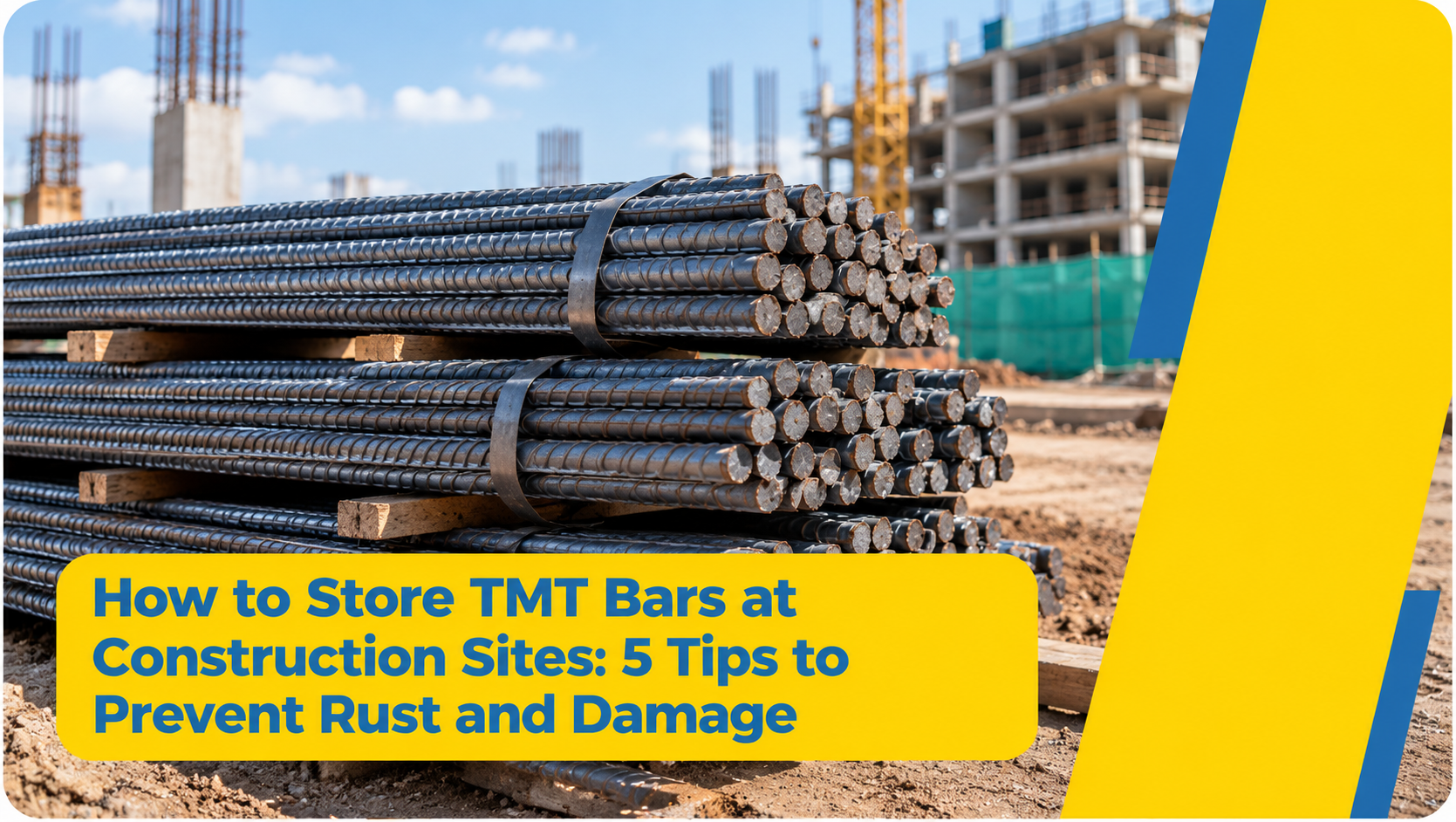
TMT bars pick up rust faster than most site engineers expect, and the damage often starts before the bar ever reaches the column or slab it was meant for. Getting the storage right is not complicated, but skipping it costs money later.
Keep the bars off the ground
Bars stacked directly on soil absorb moisture from below, even on days when it hasn’t rained. Groundwater seepage and dew both work against exposed steel.
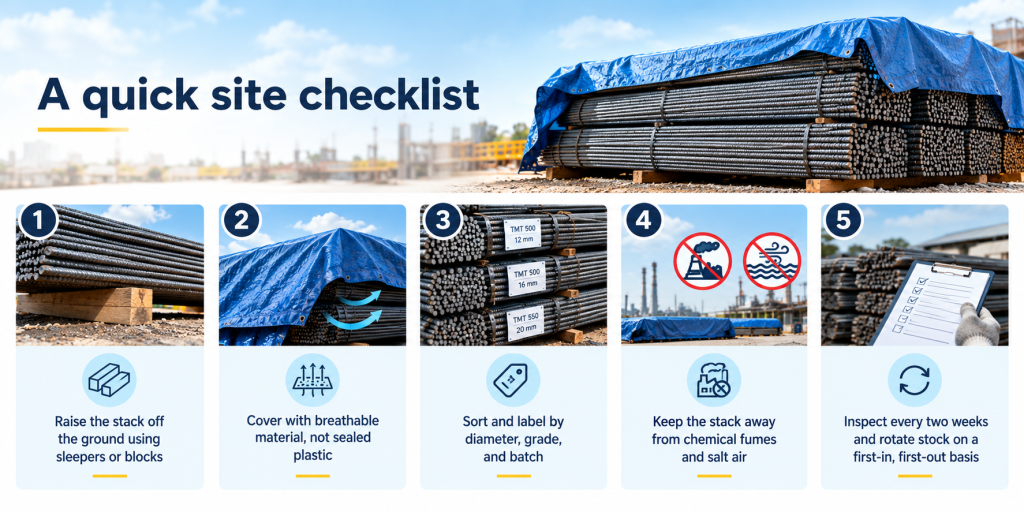
Use wooden sleepers or concrete blocks to raise the stack at least 150mm off the ground. Space the supports every two metres or so along the length of the bars, since sagging in the middle can bend them out of shape over weeks of storage.
Cover them, but let air move through
A tarpaulin over the stack blocks rain, but a sealed plastic sheet often does more harm than good. Trapped moisture underneath a fully wrapped cover creates a humid pocket, and that pocket rusts steel faster than open air would.

Sort by diameter and grade
Mixed stacks slow down site work and increase the chance of using the wrong bar in the wrong location. Sorting also makes it easier to spot damage during inspection, since a bent or rusted bar stands out faster in an organised stack than a jumbled one.
Label each stack clearly. Diameter, grade, and batch number should be visible from a few feet away, not just written on a tag buried in the pile.
Store away from chemicals and coastal air
Cement dust, chemical fumes, and salt-laden air all speed up corrosion. Sites near the coast face this constantly, and even inland sites with a cement storage shed nearby aren’t fully safe.
Keep TMT bar storage at a reasonable distance from cement bags, curing chemicals, and any area where fumes settle. If the site sits within a few kilometres of the coast, cover the stack more thoroughly and check it more often than the standard schedule would suggest.
Rotate stock and inspect regularly
Bars that sit for months without movement are the ones most likely to show damage to the TMT bars by the time they’re finally used. First-in, first-out isn’t just an inventory principle here; it directly affects how much rust a bar develops before it goes into the structure.
Walk the stack every couple of weeks. Look for surface rust, bent sections, or cover damage from wind. Catching a problem early usually means a wire brush and some elbow grease. Catching it late can mean rejecting the bar altogether.
Why storage conditions matter more than people assume
A TMT bar’s ribbed surface and hardened outer layer are engineered for strength, not for indefinite exposure to weather. Surface rust that looks minor can still weaken bond strength with concrete if left untreated, and pitting corrosion, once it sets in, doesn’t reverse.
This is exactly the gap between a bar that performs to its rated strength and one that quietly falls short after years in a structure. Storage conditions for TMT bars aren’t a footnote in the construction process. They’re part of what determines whether the steel delivers the yield strength and durability it was tested for in the first place.
UltraMax addresses part of this problem at the manufacturing stage. Its TMT bars are produced using German Thermex technology, developed with Hennigsdorfer Stahl Engineering GmbH, giving the bars a corrosion-resistant surface layer that holds up better against site conditions than untreated steel. That head start matters, but it doesn’t remove the need for proper storage. Even the best bar loses some of its advantage if it sits in standing water for a month.
A quick site checklist
None of these steps take much time. Together, they prevent the kind of damage to the TMT bars that shows up only after the concrete has already been poured, when fixing it is no longer an option.