

Ask five different site supervisors what diameter TMT bar a foundation needs, and there’s a decent chance you’ll get five different answers. Diameter choice isn’t guesswork, though. It follows load calculations, and the weight of the bar itself plays into that math more than most people realise.
Why weight isn’t just a shipping detail
Every TMT bar diameter carries a theoretical weight per metre, and that number matters for more than billing. Structural engineers use it to calculate the total steel tonnage a foundation needs, and site teams use it to verify that delivered bars actually match their stated diameter.
A bar running noticeably lighter than its standard weight for that diameter is a red flag. It usually means the actual diameter is smaller than what’s marked, which throws off strength calculations across the entire structure.
TMT bar weight chart (standard sizes)
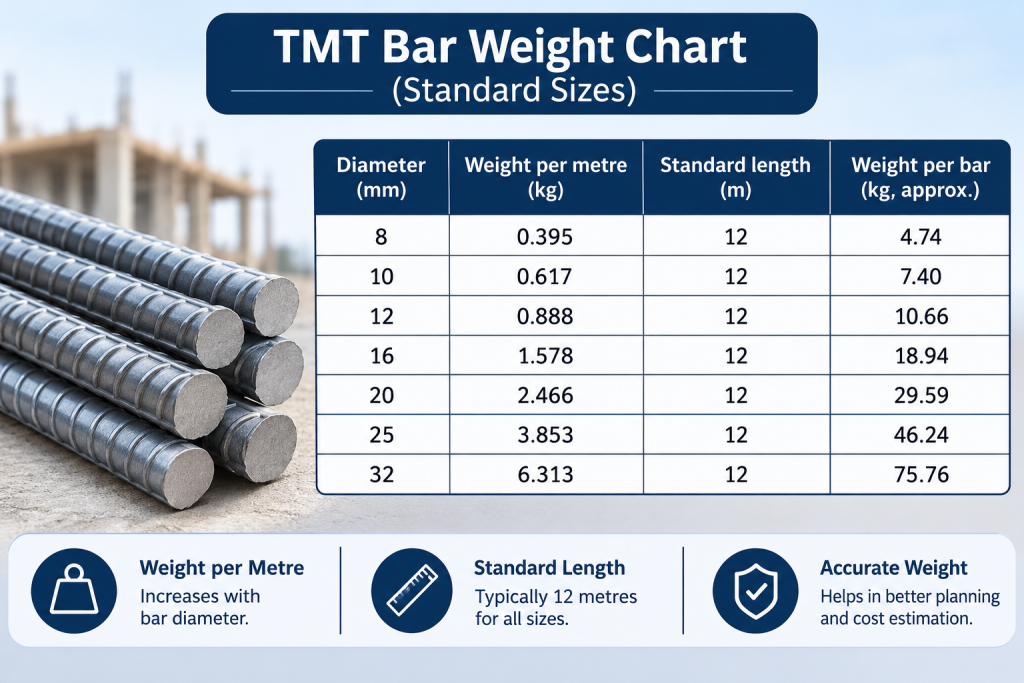
These figures follow the standard formula (D²/162) used across the industry to calculate weight per metre for round steel bars, where D is the diameter in millimetres. Most manufacturers, UltraMax included, follow this same calculation, so any bar that deviates meaningfully from these numbers deserves a closer look before it goes into a structure.
What length of TMT bar actually means for site planning
TMT bars typically come in 12-metre lengths, though some manufacturers offer 11.7m or 13m depending on regional practice. This length matters for two practical reasons.
First, wastage. Cutting a 12m bar into pieces that don’t divide evenly leaves offcuts, and offcuts add up to real cost across a large project. Second, lap length. Bars often need to be joined through overlapping splices, and planning around standard 12m lengths reduces the number of joints needed compared to working with shorter, irregular pieces.
Matching diameter to foundation type
Foundation design isn’t a one-size-fits-all decision, but some patterns hold across most residential and mid-rise construction.
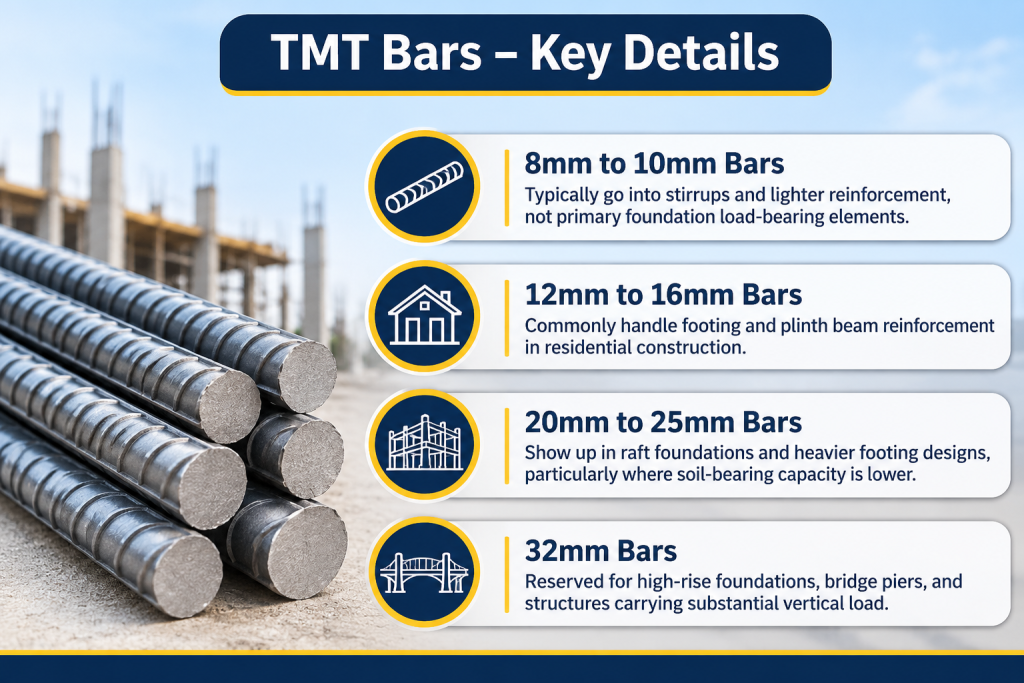
This is a general pattern, not a substitute for structural calculation. Soil type, building height, and seismic zone all factor into the final diameter selection, and that decision should come from a structural engineer working with actual site data, not a chart alone.
Why theoretical weight and actual weight sometimes differ
Here’s something worth knowing before a delivery arrives. The weights in a TMT bar weight and size chart are theoretical, calculated from nominal diameter. Actual bars carry a permissible tolerance, usually within plus or minus a few percent under IS 1786.
A batch running consistently at the lower edge of that tolerance isn’t necessarily defective, but it’s worth flagging for verification. Weighing a sample bundle and comparing it against the chart takes a few minutes and catches problems before they’re buried in concrete.
Getting the diameter decision right
Site teams sometimes default to over-specifying diameter, reasoning that thicker means safer. That logic misses the point. Oversized bars increase cost without necessarily improving performance, and they can complicate detailing at congested reinforcement zones like beam-column junctions.
The better approach starts with the structural drawing, not the stockyard. Once the required diameter is confirmed, the weight chart becomes a verification tool, not a selection tool. UltraMax manufactures its TMT bars across the standard diameter range, from 8mm through 32mm, each tested against IS 1786 tolerances so the weight per metre holds consistent across a batch, not just on a sample piece pulled for a certificate.
